Expert advice, market reports, and tips from the Niagara Region real estate professionals.
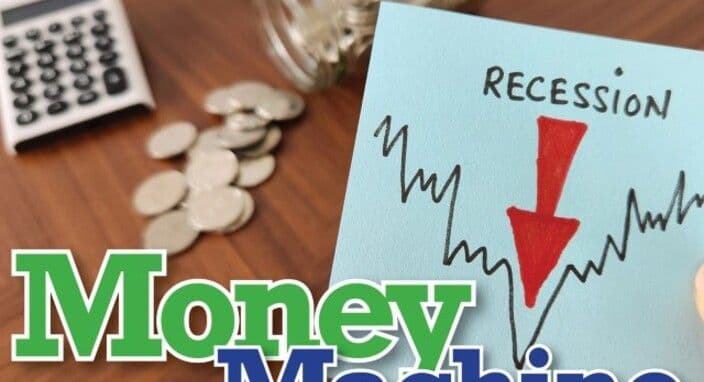
Often things economic go in cycles. Whether we are talking the stock market, the real estate market or whatever. Things are relatively tranquil. Then a few investors sense an opportunity and buy in, then a few more, and before long it’s a stampede. I mean with so many rushing to get it, it must be the right thing to do, mustn’t it? 100,000 lemmings can’t be wrong

More and more I’m hearing people say “with the high cost of housing these days and the soaring interest rates, how are today’s young people ever going to be able to afford a house?”.
I recall speaking to a landscaper on one occasion about a new lawn and yard design he was working on. He told me that generally a complete landscaping makeover was good for about 15 years. After that, it pretty well needs to be redone. The reason? Functional obsolescence. The shrubs and trees are still in play but what was once an ornamental bush has become a tree. Trees have grown out and now crowd gardens. Grass has become thick and riddled with crab grass. The elements are still there, but they have outgrown their practical purpose and usefulness.
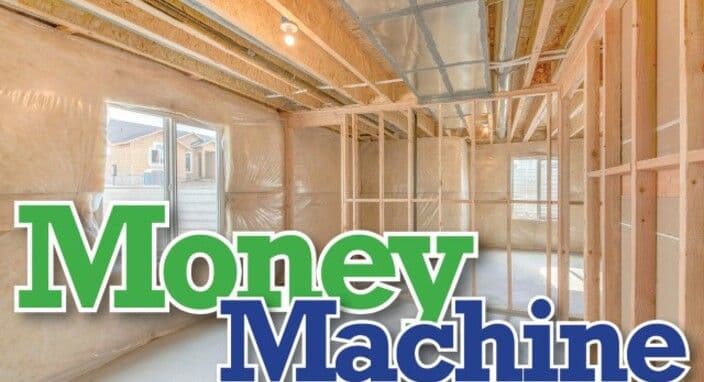
In our last Money Machine article, we compared multi-family residential buildings that were designed and built as such to buildings that were converted to become multi-family. And we saw that there are a lot of advantages to owning buildings that were designed and built to be exactly what they now are. Especially true in the case of small entities such as duplexes and triplexes.
I’d like to talk to you today about multi-family residential buildings. As you develop your investment portfolio, you’ll absolutely want to have some multi-family buildings in the mix. Of course, when I speak about multi-family this can encompass all the way up to high-rise apartment buildings containing hundreds of rental units. But for most of us, we are not at and likely will never be at that level of investment. However multi-family can also include your typical duplex or triplex. And that is where most of us are going to be involved. In fact, CMHC and most banks draw a line at 4 units. Anything above 4 units is considered commercial and is handled by their commercial division. Four or fewer are under the residential umbrella.
The Money Machine concept is really quite simple. Buy one property a year for ten years. Never amortize for more than fifteen years. And never sell! Simple yes. But not easy.

Many years ago, when I was in my early twenties and living in Montreal, I had a friend, still at home, whose parents were renters. They had always been renters. They always would be renters. One day the dad made a rhetorical statement by saying to me “you take a paper and pen and show me how anyone is ever better off owning than renting.” Of course, he didn’t want to be shown. His mind was already made up. But let’s take his situation and look at it for a minute.
They say that purchasing your principal residence is largely an emotional decision while buying an investment property is a matter of logic. And while there is a certain amount of truth to that, it isn’t the whole story. Or at least it shouldn’t be. One element that should be prevalent in both is the pride of ownership. Let me explain.
Whenever I teach the Money Machine seminars, send out video updates, or council investors, I encourage them to do an annual net worth statement. Basically, it’s a yearly report card of the strength of your assets and it’s easy to do

When you are looking at acquiring an investment property, there sometimes is an avenue for financing available that might not be as available when buying an owner-occupied property.

Purchasing your first home. It’s an exciting time and a moment you’ll never forget. But it’s also a tremendously challenging time with the price of houses these days. Even with the downward slide in prices, residential real estate has doubled in price over the past six to seven years. And with the rapid increase in mortgage interest rates of late, carrying costs are significant.