Expert advice, market reports, and tips from the Niagara Region real estate professionals.

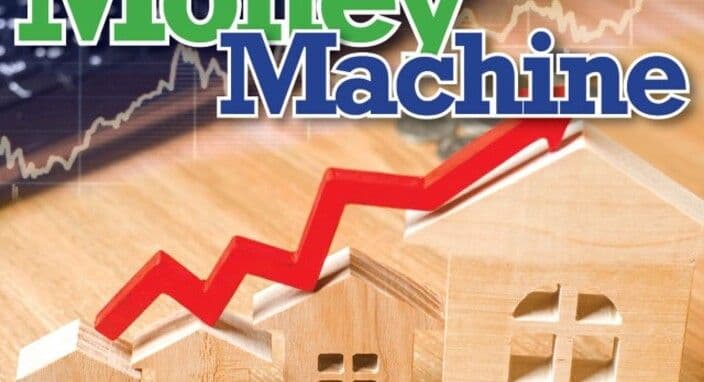
The Money Machine espouses a plan whereby an investor is encouraged to acquire 10 rental properties. Generally, a mixture of single-family, duplex and triplex. And, of course, that can branch to encompass condos and even commercial and industrial. But there are reasons for a minimum of 10. The first, obviously, is an adequate income upon retirement. Suppose, for example, you bought one investment property. A duplex, perhaps. That’s great! But suppose you stopped there. You simply can’t retire comfortably on two rents. Suppose they produce a gross monthly income of $3,600. After taxes and expenses, that might net you $2,900/month. A real help, but not enough to support a lavish lifestyle.
Warren Buffett, one of the richest people on the planet, celebrated his 95th birthday recently. Celebrating that event, he quipped, “I’m one of the richest people in the world. I can buy anything I want. But I can’t buy time.”. How true. As a young man, he set out in life with lots of time but very little money. Over the years, with clear goals and vision along with shrewd investing skills, his wealth grew and grew. And during the process, the grains of sand trickled down through the hourglass. He amassed vast amounts of wealth, but it took time.
Last month we looked at how the residential rental market is shifting from being a market where rental units were in scarce supply and tenants had a tough time finding adequate accommodations to one where there were a relative abundance of vacant rental units and tenants had choice. And looking at the forces that were bringing about that shift, it’s safe to say that trend is likely to continue.
Real estate goes in cycles. I think we all realize that. Sometimes as was the case during the covid era, properties are in hot demand. Buyers are frantic to get their hands on them. Sellers are reluctant to put their homes on the market knowing they will be quickly snapped up, but they are fearful they won’t find one to buy. Multiple offers are the norm on most listings. People outbid one another and sales generally go for above asking price. We call this situation a seller’s market.
The Money Machine seminar boiled down to its simplest form is a three-step process. 1. Buy one property a year for ten years. 2. Never amortize your mortgages for more than 15 years, and 3. Never sell. Stick to that exact formula and you’ll never have to worry about cash flow in retirement.
When I was a kid, my parents opened up a snack bar in cottage country just inside the Highlands of Haliburton. It was my dad’s dream to break free from his employment situation and be self-employed. The venture didn’t work out to be particularly profitable, but that’s another story. I want today to share an incident surrounding that venture that sticks with me to this day. I think it holds a lesson for us all.

In today’s newsletter I’m going to cover an area where I am personally deficient. That comes under the heading of repair and renovation, and specifically asks, what degree of quality should be used to rectify problems as they occur.
Square footage. It’s an important parameter in real estate. Both in residential and in commercial. In residential, square footage is an important factor when it comes to computing value. You see two properties on the market. Both 3 bedroom bungalows. All things being equal: location, condition, amenities.
Last issue we took a look at commercial investments and saw how they stacked up compared to residential rentals. And, we saw there were a lot of advantages for the commercial landlord. Not just in removing him from the oppressive control of the Residential Tenancies Act. But also, huge advantages when it came to cash flow and return on investment. Chiefly because many, if not most commercial tenancies are what we call ‘carefree net leases for the landlord’ or TRIPLE NET LEASES. Simply put, this means that all the expenses typically associated with rentals and borne by the residential landlord are passed on to the tenant in commercial situations.

In our money machine seminars and as investors, the bulk of our attention has been focused on residential real estate investment. It’s the easiest to acquire, the easiest to finance and generally speaking the easiest to rent out and keep rented. After all, regardless of the economy we find ourselves in, people always need a roof over their heads. So, while in tough economic times, when many businesses are struggling, you might see a lot of ‘for lease’ signs on strip plazas and retail outlets, that’s not typically the case with houses and apartment units.
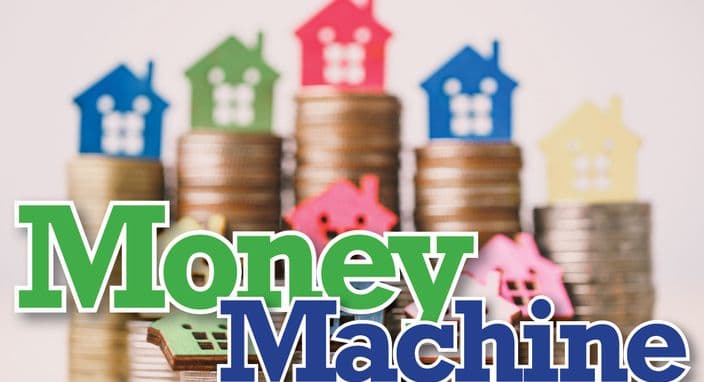
Buy one property a year for ten years. Never amortize for more than 15 years. Never sell. That in a nutshell is the basis of The Money Machine Seminar. I first rolled that seminar out in 1989. Unlike today, nobody was doing real estate investment seminars back then. Today with all the ‘nothing down’ ‘get rich quick’ schemes out there, people are jaded when it comes to courses on real estate investment. But back 36 years ago the room was packed.

Last issue we looked at the challenge of setting out to build an investment portfolio. We saw that while a multi-family building is a great place to start, regardless of the investors profile, there are a number of considerations as we continue to develop.